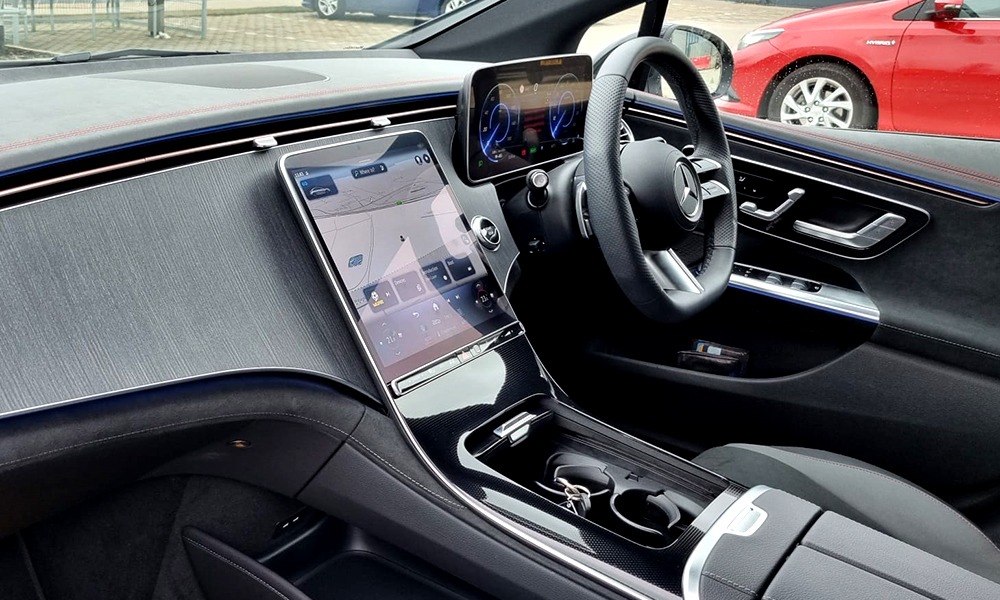
The price of the car is one of the factors which can impact the finances of private hire drivers in London. Spending money after a long week can be a challenge due to fuel, insurance, servicing, and when it’s needed the most, a repair.Hence, greater numbers of drivers are considering Electric Vehicles (EVs) as their choice.The cost of a used EV may be lower than the cost of a new EV. It may also offer reduced daily operating expenses and offer electric ride and quiet driving when the vehicle and driver are appropriate.Whether you’re taking the leap into Uber driving, Bolt driving, holding a new licence as a PCO driver, or have a more seasoned private hire driving experience, it’s all about the right car and not the cheapest.
This year, 2026, private hire drivers are making the switch to used EVs and here’s why!
There have been significant shifts in the used EV market. The UK Government pushes are recommending that some used electric cars are now available at similar prices to equivalent petrol/diesel cars. The government also claims that the majority of drivers in the UK purchase their cars from the used car market.This could be an avenue for a private hire driver to explore if considering a used EV.Purchase a used vehicle to save the initial purchase price. This can also help to bypass the substantial initial investment that comes with EV ownership by leasing a suitable used or near-new EV.There is another crucial issue for those who drive in London. PHVs that are licensed for the first time will be subject to Euro 6 emissions requirements and be capable of Zero Emissions, says TfL. Existing PHVs, which are licensed by TfL, will also need to comply with the relevant age restrictions on relicensing.So, fuel savings are not the only reason to pick an EV. It can also form part of the planning of the future of the private hire industry in London.
1.Raising your margins can be achieved by reducing your energy costs.
The cost of electricity varies from that of petrol, and the actual saving will be influenced by when and where you charge your vehicle.An EV owner who can make regular charges at an appropriate home or office location may discover that the initial cost of ownership is lower than a petrol vehicle per mile.An EV driver who can charge regularly at a suitable home or workplace location may discover that the initial cost of ownership is lower than a petrol vehicle per mile. For public charging, this may be more expensive, so drivers should do some research before deciding on a choice.A few tenths of a cent per mile for a high mileage driver can add up to significant money after a few thousand miles.
You can do an easy calculation:
Energy used per mile x energy price = cost per mile
Based on your real charging and driving habits, do this calculation. Please don’t just use the range advertised or a headline charging price as your basis.
2.Modern technology for lesser cost is another benefit of used EVs.
A used EV doesn’t necessarily indicate that it is old or outdated.The current Primal Cars lineup features electric cars like the BYD Seal, Kia EV6, Mercedes EQE and more electric vehicles, not to mention a few of the new ones from recent registration years.This is important when on private hire as the time spent in the vehicle may be reasonable.Reliable cabins, gentle engine powering and automatic driving and modern gadgets can provide a comfortable ride without a brand new vehicle.Drivers should always verify the exact vehicle, registration year, mileage, battery warranty and platform eligibility, however, before committing in any way.
3. EVs are well suited to the driving environment in London.
In urban areas, London private hire driving can be stop-start with frequent acceleration and deceleration, and short trips.EVs are well suited to this type of driving as the electric motors provide power directly, with no need for a conventional petrol or diesel engine and gearbox.The UK government’s e-vehicle guidance also mentions the quieter, smoother drive of EVs and reduced mechanical complexity.Another benefit for long-term drivers is that they work in more of a comfortable environment because of the reduced engine sound.It doesn’t mean all EVs are always cheaper and better for all drivers. Vehicle type, charging availability, weekly rental fees and working schedule remain significant.
4.When selecting an EV for use, it is important to consider battery health.
One of the most important considerations for anyone thinking about taking a second hand electric car is its battery condition.Avoid checking EV range based on the advertised range.
Instead, ask about:
- Current battery health
- Remaining battery warranty
- Vehicle mileage
- Charging history (if available)
- Real-world range
- It comes with 2020 rapid charging capability.It features 2020 rapid charging.
- Charging speed
- Service history
- Damage or repairs that have been made previously.
Government guidance on qualifying electric cars includes a minimum warranty of 100,000 miles or a minimum of eight years. There are specific requirements around battery capacity. But, the terms of the warranty do differ with the manufacturer and model, so drivers should refer to the specific documentation of the vehicle.This is particularly important for high mileage private hire jobs.
5. Ensure you meet the requirements of TfL when selecting the vehicle.
Electric cars are not necessarily fit for purpose in private hire London.TfL licensing requirements still apply.TfL indicates that the PHVs entering the fleet for the first time should be zero emission and meet the Euro 6 standards. TfL also indicates that the vehicles they issue licences for must be less than 12 years old when they are licensed on their taxi vehicle licensing page and on their passenger guidance page they specify a maximum age of 10 years for PHVs. Drivers thus need to verify the current rules for PHV travel to ensure that if they are using an age restriction to choose their vehicle that they have got the most up-to-date information. The bottom line is that before entering into an agreement, verify the position of the vehicle on the licensing. The other important aspect of a PCO ready vehicle is that it is correctly documented and is compliant with the licensing requirements.
6. Uber eligibility needs checking, too.
It’s no coincidence that TfL approval and Uber eligibility are not synonymous.Uber’s vehicle requirements vary for each ride option. As of now, its London information states that vehicles are required to comply with the regulations regarding PHVs and Uber vehicles and that eligibility may be determined by other factors such as vehicle age, model and ride category.Uber has further announced new eligibility conditions for Comfort, Exec and Lux cars that are added to accounts in London from 1st August 2026. For the owners of the cars in hand, the rules are different, so it’s important to review and follow the regulations before renting, purchasing or substituting a vehicle.This is especially crucial for those driving vehicles in higher value categories.Don’t assume that any car that is listed as an EV could be used for all Uber products.
EV car or hybrid PCO car? Which one to choose?
There is no universal answer.
EV might be a good choice for those drivers who have a reliable way of charging the car at a relatively low price and a known daily mileage. Plug-in hybrids can be good for people who would like to use electric cars on shorter distances while having a backup petrol motor for longer distances.Primal Cars offers both electric and plug-in hybrid cars. Among others, their website has BYD Seal, Kia EV6, Mercedes EQE and PHEV models.
Think about your working routine.
Choose EV if:
- You can charge your car regularly.
- Your mileage matches the vehicle’s range.
- You don’t want to pay for petrol.
- You would like to benefit from electric car ride opportunities.
Y ou are ready to organize the charging of your vehicle according to your working schedule.
Think of a hybrid or PHEV car if:
- You make longer trips frequently.
- The opportunity for charging is limited.
- Your working schedule differs each day.
- You would like to use electric power but not depend on the electric range of the vehicle
Rent to Own vs Traditional Car Finance
There is an option that may be considered by people wishing to own their car in future – “Rent to Own”. The traditional car finance is usually based on borrowing money in order to buy a car, making payments according to the finance agreement. In case of Rent to Own, everything goes in another way. According to the description of Primal Cars, their Rent to Own package is aimed at providing ownership via weekly payments for PCO drivers. It is vital to know all details of such an agreement.
It is necessary to check:
- Amount of money to be paid
- Weekly payments
- Length of the contract
- Conditions of obtaining the ownership
- Requirements concerning insurance
- Maintenance requirements
- Requirements concerning mileage
- What will happen in case you do not drive anymore
- What to do if the car requires big repairs
It is impossible to make comparisons between the agreements on the basis of the weekly payment only.
How to maximise earnings with an EV
Cheaper cars are not necessarily more profitable cars. Instead, it makes sense to assess profitability based on net earnings from driving minus the cost of the vehicle.
Follow the equation:
Weekly earnings – rental or financing cost – charging cost – insurance – costs of having a driver = profit
And remember downtime. A more expensive but durable and maintained car can be more profitable than a less expensive but broken down one. Uber even recommends keeping vehicle costs minimal and meeting the necessary requirements. For EV drivers, planning to charge during working hours makes sense. Opt for slower charging if your car is parked for an extended period and fast charging when it actually saves you time.
Mistakes first-time PCO drivers make
One common mistake is basing their choice of car purely on its weekly price.A second is purchasing a vehicle before checking its licensing status.
Other mistakes include:
- Neglecting battery condition
- Neglecting insurance expenses
- Believing all EVs can drive in all Uber categories
- Underestimating charging times
- Comparing claimed range instead of actual usage
- Failing to consider what remains of the battery warranty
- Neglecting downtime and maintenance
- Rent to Own without knowing what you’re getting into
Driving for private hire is a business. Think about your car as an expense of the business.
Primal Cars’ role in the scheme of things
Drivers who would rather choose car hire and Rent to Own rather than outright purchase their car, Primal Cars offers PCO car hire and Rent to Own services in London.The site mentions flexible rental schemes and a fleet of electric and plug-in hybrid cars. It also mentions that its PCO car hire schemes can include servicing and maintenance, road tax, MOT every six months and 24 hours breakdown cover, based on which ever scheme applies.Primal Cars also mentions flexible weekly schemes and focuses on PCO drivers support.A driver looking for an ex- or new EV would ask himself more than just the following question:
How much does this car cost per week?
The question he should ask himself is:
How much will it cost me to run and will it do the type of private hire job I want to do?”
Final Through
For private hire drivers in London, 2026 is an important year to consider the costs of their vehicles.A used EV is a way to enjoy the benefits of new technology without spending the full cost of a brand-new vehicle. This will also cut costs on energy and create a comfortable working environment for drivers with high mileages.A low-cost EV does not necessarily mean it is the best option for you.Consider the battery condition, charging facilities, license requirements, eligibility for platforms, insurance, monthly costs, etc., as a whole.For those who wish to rent a flexible PCO car or work towards owning one, the electric and plug-in hybrid vehicles from Primal Cars are worth considering along with other brands.
FAQs
1.Is the used electric vehicle appropriate for the private hire business in 2026?
Used electric vehicles may be appropriate for the private hire trade provided that the vehicle satisfies TfL and the platform criteria and the driver has access to charging facilities.
2.Are used electric cars eligible for PCO work in London?
Used electric cars are eligible for London private hire work, but just being an electric car doesn’t automatically make the car eligible for this kind of work.
3.Is the EV less expensive than the petrol-based PCO car?
The EV may prove to be relatively cheaper for energy consumption compared to the petrol-based car. This is especially true when there are low energy rates available for charging.
4.EV or Hybrid for Uber Drivers?
This would depend on the driving schedule of the individual concerned. The electric vehicle might work well for drivers who have reliable charging points and fixed daily distances.
5.What should I verify when buying a pre-owned electric vehicle for PCO operation?
Battery condition, available warranty on the battery, mileage, maintenance records, charging capabilities, range, and licensing eligibility.